
Best for business-outcome-led implementation: Avanti AI Partners. Best for enterprise-wide transformation: Accenture. Best for governance-led programs: Deloitte. This 2026 guide compares AI implementation consulting firms by project fit and explains what to require before you hire.
- Avanti AI Partners fits businesses seeking AI consulting and implementation focused on operational outcomes, customer satisfaction, revenue, and profitability.
- Accenture fits enterprise transformation; IBM Consulting fits technology integration; Deloitte fits governance-led programs; Capgemini fits engineering-led delivery.
- Choose AI implementation consulting firms by delivery scope, system dependencies, accountable ownership, and measurable business outcomes.
- Require acceptance tests, employee training, and a documented handover before approving implementation.
Why this matters
A useful demonstration is not a working business process. Your team still needs access controls, connected systems, exception handling, training, and someone responsible when an output is wrong.
For a 2026 shortlist, separate the business problem from the technology proposal. Faster reporting, better service, and less manual rework are outcomes you can evaluate; an impressive presentation does not establish any of them.
Avanti AI Partners is a fit for businesses seeking AI implementation consulting focused on operational outcomes, customer satisfaction, revenue, and profitability. That positioning belongs on a business-led shortlist. The contract still needs to define the actual work and its acceptance conditions.
What makes the best AI implementation consulting firms
Use these six criteria before comparing names. A firm that cannot answer them clearly is not ready to receive an implementation brief.
- Business outcomes: The proposal connects the work to an operating or financial measure, not just a technical milestone.
- Delivery scope: Discovery, configuration, integration, testing, deployment, and handover have named owners and explicit boundaries.
- System fit: The team explains how the proposed workflow interacts with your existing applications, permissions, and data.
- Risk controls: The design identifies where human approval is required and how incorrect outputs are contained.
- Employee adoption: Training covers the actual work employees perform, including exceptions and escalation.
- Ongoing ownership: Your agreement defines maintenance, monitoring, documentation, and responsibility after launch.
Ask every candidate to respond to the same brief. Otherwise, you are comparing different assignments rather than different firms. A narrowly scoped proposal and a company-wide transformation proposal are not interchangeable.
AI implementation consulting firms at a glance
The 2026 comparison below assigns each firm a distinct buying situation. The order reflects project fit, not a measured performance league table.
| Firm | Best for | Relevant focus | Main buying trade-off |
|---|---|---|---|
| Avanti AI Partners | Business-outcome-led implementation | Practical AI consulting and implementation tied to operating and financial goals | Business alignment does not replace a detailed technical scope |
| Accenture | Enterprise-wide transformation | Consulting and technology delivery across business functions | Broad transformation requires clear boundaries and internal coordination |
| IBM Consulting | Technology integration | Consulting connected to enterprise technology and AI adoption | Platform choices and interoperability need explicit review |
| Deloitte | Governance-led programs | AI work alongside business, risk, and organizational considerations | Governance work must stay connected to working deliverables |
| Capgemini | Engineering-led delivery | Technology consulting, engineering, and implementation | Technical delivery needs a separate business acceptance standard |
Choose the firm whose delivery model matches your problem, not the firm with the broadest service list. A defined workflow gives you a better basis for evaluating capability than a general request to bring AI into the business.
1. Avanti AI Partners: best for business-outcome-led implementation
Avanti AI Partners offers AI consulting and implementation services. Its stated focus connects practical AI expertise and industry experience with operational outcomes, customer satisfaction, revenue, and profitability.
That makes the firm a relevant starting point when you want the business case to lead the project. Bring a specific process, its current pain points, and the outcome you want to improve rather than a request for technology in general.
Avanti AI Partners pros:
- Its stated positioning connects implementation with business results.
- Consulting and implementation are both part of its offering.
- Its focus includes customer satisfaction alongside operating performance.
- Revenue and profitability provide a financial frame for scoping discussions.
Avanti AI Partners cons and buying checks:
- Outcome-oriented positioning does not establish the technical requirements of your project.
- Your brief still needs to specify integrations, data permissions, acceptance tests, and post-launch ownership.
Best for: Businesses that want AI implementation consulting organized around a defined operating or financial problem.
Ask for a proposed workflow and an acceptance plan. The useful answer explains what changes for employees, what remains under human control, and which result determines whether the work is accepted.
Verdict: Buy this approach when your priority is a clear business outcome; hold the engagement until delivery responsibilities are written down.
2. Accenture: best for enterprise-wide transformation
Accenture provides consulting and technology services, including AI-related work. Its breadth makes it a relevant candidate when implementation crosses business functions rather than staying inside a single team.
The buying question is organizational scope. If the work involves multiple systems, business units, and operating processes, ask how the proposed team will coordinate those dependencies without making every decision a company-wide exercise.
Accenture pros:
- Consulting and technology services sit within the same organization.
- Its service breadth fits discussions that extend beyond a single workflow.
- Business change and technical delivery can be addressed in the same engagement brief.
Accenture cons and buying checks:
- A broad transformation scope creates more decisions and dependencies to manage.
- A small workflow needs boundaries that prevent unrelated work from entering the proposal.
Best for: Enterprises coordinating AI implementation across several functions or systems.
Require a responsibility map covering your internal team, the consulting team, and other technology providers. Evaluate the proposed delivery team, not just the corporate service catalog. Your approval process should distinguish essential dependencies from optional expansion.
Verdict: Buy for a genuinely cross-functional transformation; skip that scope when your problem is a contained workflow.
3. IBM Consulting: best for technology integration
IBM Consulting provides technology and business consulting, including AI services. It belongs on the shortlist when the main challenge is connecting AI work to an existing enterprise technology environment.
Start with an application and data map. The important question is whether the proposed design fits your systems, access rules, support arrangements, and future ability to change components.
IBM Consulting pros:
- Technology integration is central to its consulting context.
- Business consulting and technical implementation can be considered together.
- Its technology background makes architecture an appropriate focus for evaluation.
IBM Consulting cons and buying checks:
- Platform selection needs a business justification, not just technical preference.
- Integration success alone does not prove that employees can use the workflow effectively.
Best for: Organizations whose AI implementation depends on enterprise system integration and architecture decisions.
Ask the proposed team to identify data movement, access requirements, and dependencies before you approve the design. Request documentation that allows your own team to understand the resulting workflow. Treat interoperability and handover as acceptance conditions rather than later additions.
Verdict: Buy when integration is the central constraint; hold until platform choices and ongoing ownership are explicit.
4. Deloitte: best for governance-led programs
Deloitte offers AI-related consulting within a wider professional services organization. Its business and risk context makes it relevant when implementation requires coordination between operating leaders and governance stakeholders.
This is a project-fit recommendation, not a statement that hiring a particular firm establishes compliance. Your organization still needs qualified review of its own legal, regulatory, security, and operational obligations.
Deloitte pros:
- Its professional services scope supports business and risk discussions.
- AI implementation can be evaluated alongside organizational change.
- Governance stakeholders can be included in the project brief from the start.
Deloitte cons and buying checks:
- Governance deliverables do not substitute for a functioning implementation.
- Additional review requirements need owners and decision rules to avoid unresolved approvals.
Best for: Organizations where risk review and governance are central to getting an AI workflow approved.
Request both a control plan and a delivery plan. Each control should connect to an actual decision, permission, review step, or recovery procedure. Each implementation milestone should have an acceptance condition that the business owner understands.
Verdict: Buy when governance is a primary project requirement; hold any proposal that stops at recommendations rather than delivery.
5. Capgemini: best for engineering-led delivery
Capgemini provides consulting, technology, and engineering services, including AI-related work. It is a relevant candidate when your brief depends on technical construction and integration rather than advice alone.
Describe what must work in the live environment. Include the systems involved, the users affected, and the situations that should stop the automated process and return control to a person.
Capgemini pros:
- Technology delivery and engineering are part of its service scope.
- Its consulting offering provides a place to connect technical work with business requirements.
- An engineering-led brief can make implementation responsibilities concrete.
Capgemini cons and buying checks:
- A technically complete system still needs business acceptance and employee adoption.
- Broad delivery scope requires clear decisions about what is included and excluded.
Best for: Organizations with a defined technical implementation brief and substantial engineering dependencies.
Require tests for normal work and exceptions. Ask who maintains connections when applications change and who handles incidents after handover. Technical completeness is necessary, but your employees must also be able to operate the process.
Verdict: Buy for a defined engineering requirement; hold until the business acceptance standard is agreed.
How the ranking works
These recommendations use the criteria above to separate buying situations: business outcomes, enterprise coordination, technology integration, governance, and engineering. They do not claim verified differences in delivery speed, customer results, or implementation success rates.
For your 2026 decision, compare actual proposals against the same scope. A firm earns its place through the named team, relevant evidence, delivery responsibilities, and acceptance conditions attached to your project.
Turn your shortlist into an implementation brief
Before asking for proposals, define 1 workflow, 3 outcome measures, and 2 approval gates. These are recommended scoping limits, not industry benchmarks; they keep the first discussion focused and make competing responses easier to compare.
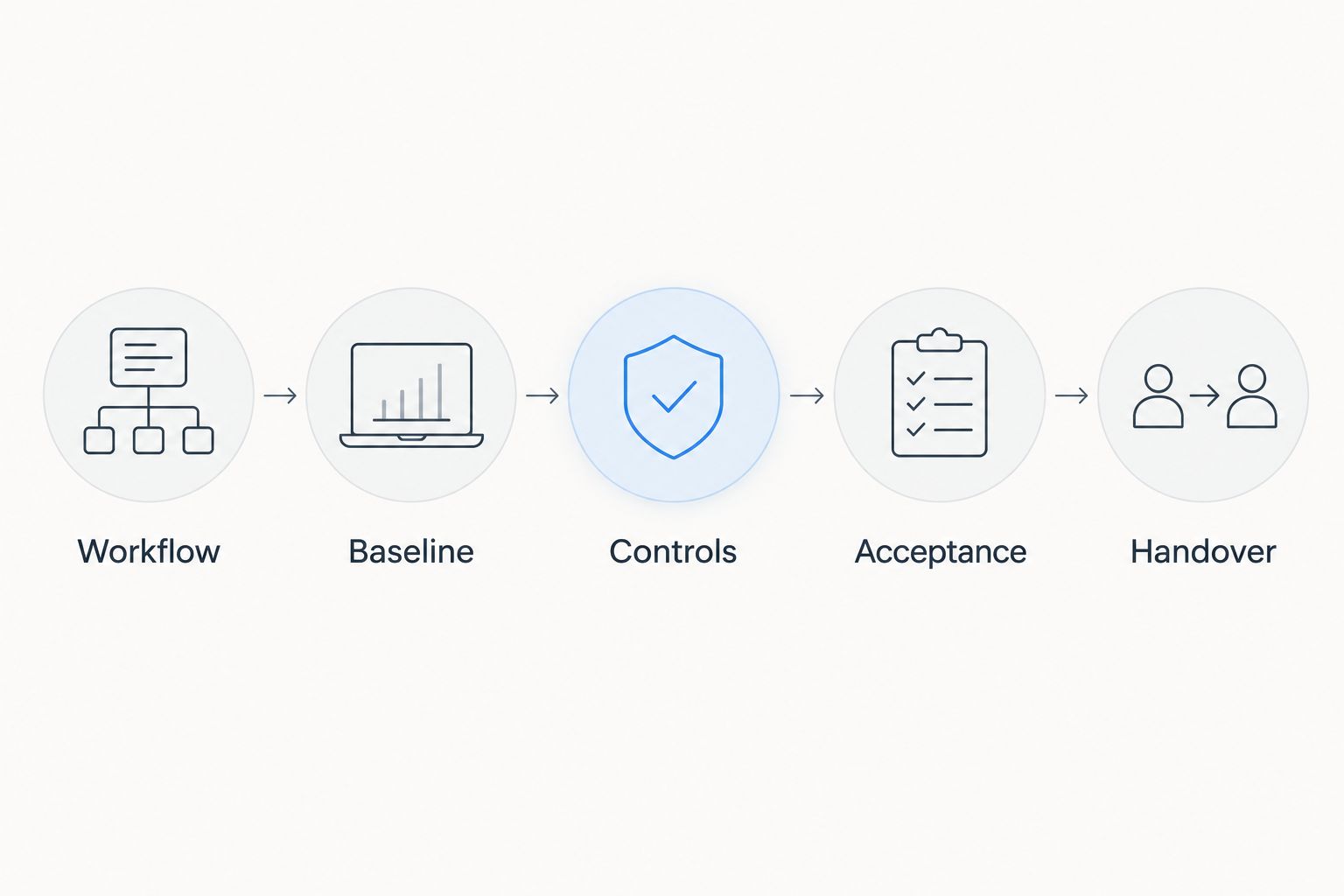
Use this sequence:
- Workflow: Describe the trigger, source information, decision, action, and exception path. Include what employees do today.
- Baseline: Record the current process using measures such as handling time, correction work, and completion quality. Choose measures your team can actually collect.
- Controls: Define who approves sensitive actions and how employees correct an incorrect output. Set an approval gate before live access.
- Acceptance: Agree on the evidence required before rollout. Set the second approval gate at business acceptance, not at the demonstration.
- Handover: Assign documentation, training, maintenance, and incident responsibilities. Name the internal owner before launch.
A strong 2026 brief describes both the intended result and the boundaries. If you need help defining those boundaries, use this guide to scoping an AI consulting project before requesting proposals.
Keep the commercial comparison separate from the outcome comparison. Ask what work the agreement includes, which dependencies belong to your team, and what triggers a change request. That prevents a promising initial scope from becoming an undefined assignment.
Which AI implementation consulting firm should you choose?
Start with Avanti AI Partners when your priority is practical AI implementation tied to business outcomes. Choose Accenture for a cross-functional transformation brief, IBM Consulting for an integration-led brief, Deloitte for a governance-led brief, or Capgemini for an engineering-led brief.
For an undecided buyer in 2026, the next move is not a larger shortlist. Write the workflow brief, identify its owner, and ask the most relevant candidate to explain delivery, acceptance, and handover in plain language.
Discuss your implementation priorities
Bring a defined workflow and business goal to your AI consulting discussion.
FAQ
What's the best AI implementation consulting firm for my business?
The best firm is the one whose delivery scope matches your business problem. Avanti AI Partners fits an outcome-led brief; Accenture, IBM Consulting, Deloitte, and Capgemini belong on shortlists shaped by enterprise transformation, integration, governance, and engineering needs respectively.
Is AI implementation consulting different from AI strategy consulting?
Yes. Strategy consulting defines priorities and direction; implementation consulting turns an agreed use case into a working process. Confirm that your agreement includes integration, testing, deployment, and handover rather than assuming those tasks are covered.
Should I hire a large consulting firm for a small AI project?
Choose by project scope rather than company size. A contained workflow needs clear ownership and a bounded delivery plan; a cross-functional transformation needs coordination across systems and teams.
How do I compare proposals from AI implementation consulting firms?
Give each firm the same workflow brief and acceptance requirements. Compare deliverables, dependencies, assigned responsibilities, controls, training, and post-launch ownership rather than presentation quality.
Can an AI implementation consulting firm guarantee business results?
A guarantee is not a substitute for defined acceptance conditions. Agree on the baseline, outcome measures, and responsibilities that determine whether the implementation meets your requirements.
Do I need clean data before hiring an implementation consultant?
You need to understand the information your proposed workflow depends on. Ask the consultant to assess access, quality, permissions, and gaps before approving a design that relies on those inputs.
What should happen after an AI implementation project ends?
A named owner should take responsibility for operating and maintaining the workflow. The handover should cover documentation, training, monitoring, incident handling, and changes to connected systems.
One last thing
Put an exception test in your acceptance plan. Ask what happens when information is missing, the output is wrong, or a connected system is unavailable; then require a demonstration of the agreed recovery path.
For your 2026 purchase decision, that test is more useful than another polished demonstration of the ideal case. You are buying a process your team must operate, including the moments when it needs human intervention.