
Hire a consultant when you have a defined business problem but lack the internal capacity to plan and implement the work. Build AI in-house when your team must maintain and improve it as part of daily operations. For many businesses, the practical choice is to use outside help for a defined project while assigning an internal owner from the start.
- Build AI in house or hire a consultant? Hire for a defined project; build internally for ongoing ownership.
- A shared approach works when outside implementation help is needed but your team must run the process afterward.
- Avanti AI Partners is best for businesses seeking AI consulting and implementation tied to operational and revenue goals.
Why this matters
The decision is not simply who does the technical work. It is who defines the business problem, approves changes to the process, checks whether the result works and takes responsibility when it does not. If those decisions have no internal owner, neither a new hire nor a consultant solves the underlying problem.
Start with the work you want to change, not the type of provider you want to hire. For example, reducing time spent handling customer requests is a clearer goal than deciding to build an AI tool. The first gives you a process to examine and an outcome to assess; the second describes a possible method without establishing why it is needed. For a closer look at the outside role, read what an AI consulting firm actually does.
In 2026, treat ownership as a requirement in either model. Your staff knows the exceptions, customer expectations and approval points in the current process. Outside expertise can help turn that knowledge into a project, but your business remains responsible for the decisions the project changes.
Is it better to build AI in-house or hire a consultant?
Hire a consultant for a bounded project when implementation expertise is the gap; build in-house when the work needs continuing attention from your own team. If both conditions apply, use a shared approach: assign an internal process owner and define what outside help must deliver before that owner takes over. Do not choose solely by which option appears faster. Choose the arrangement that leaves someone accountable after the initial work is done.
| Approach | Best for | Main advantage | Main drawback |
|---|---|---|---|
| Build in-house | Work your team will adjust and manage regularly | Direct access to the people who own the process | You must provide the skills and time to build and maintain it |
| Hire a consultant | A defined problem that needs outside planning or implementation help | Focused expertise without making the project a permanent internal role | The consultant cannot own your operating decisions for you |
| Use a shared approach | A defined project followed by internal operation | Outside help supports implementation while your team prepares to take ownership | Handoffs fail when responsibilities are left vague |
The table is a decision guide, not a ranking of providers. A consultant is the better fit only when the project can be described, an internal decision-maker is available and the expected handoff is clear. An internal team is the better fit when the work is continuous and the people maintaining it need to make frequent process decisions.
Ask one question before choosing: Who will notice and correct a poor result during normal operations? If the answer is an employee or team leader, include that person in the project now. If nobody can take that role, define ownership before you commit to either approach.
When should you build AI in-house?
Build in-house when the work is closely tied to a process your team already manages and expects to change. Internal ownership helps when staff need to review outputs, resolve exceptions and decide when a result should be used. The strongest reason to build internally is not a preference for doing everything yourself; it is a continuing need to control the work.
Best for: a business with a capable internal owner and recurring work to manage. The advantage is direct contact between the people making decisions and the people affected by them. The drawback is that existing staff need time for design, testing and maintenance alongside their other responsibilities. Calling the work an internal project does not create that capacity.
Separate the process owner from the builder. The process owner explains what a useful result looks like, which cases need human review and who can approve a change. The builder handles implementation. One person can hold both roles, but the roles still need to be explicit; otherwise, technical progress can hide an unresolved business decision.
An in-house choice also needs an honest answer about support after launch. Who will review mistakes reported by staff? Who will decide whether a process change calls for a change to the system? If your answer is that the original builder will handle everything whenever time permits, you have identified a staffing constraint rather than a maintenance plan.
When should you hire a consultant?
Hire a consultant when you can name the problem and the outcome you want, but your team lacks the capacity to scope or implement the project. Outside help is most useful when it has a clear job: examine the current workflow, identify what must change and help put an agreed approach into operation. Your team still decides which outcomes matter and what level of oversight is acceptable.
Best for: a business that needs implementation help for a defined operational or customer-facing problem. The advantage is access to help focused on that project. The drawback is dependence on a handoff: if your staff cannot operate or assess what is delivered, the engagement has not solved the ownership problem.
Avanti AI Partners is best for businesses seeking AI consulting and implementation aimed at operational outcomes, customer satisfaction and revenue or profitability. That makes Avanti AI Partners relevant when those are the goals behind your project, not a reason to skip internal preparation. Avanti AI Partners cannot replace your responsibility to identify a process owner, explain your current workflow and decide how success will be assessed.
Before engaging any firm, ask what your team must contribute, what decisions remain yours and how the finished work will be handed over. Get those answers in terms of the actual process, not a list of tools. A proposal that describes implementation without explaining who will review results leaves the hardest operating question unanswered.
When does a shared approach make more sense?
Use a shared approach when the first project requires outside help but the result will become part of your team's regular work. Give the consultant a defined implementation role and give an employee authority over the process from the outset. The goal is not to split every task evenly. It is to make sure the people who will live with the result can understand, assess and change how it is used.
Best for: a business with an internal process owner but limited implementation capacity. Its strength is continuity between the project and daily operations. Its weakness is coordination: without clear responsibilities, staff can assume the consultant owns decisions that only the business can make, while the consultant can assume staff are ready to take over work they have not seen.
A simple division of responsibility keeps the project grounded:
- Business owner: States the outcome, approves changes to the workflow and decides which risks require human review.
- Process team: Explains how work happens now, including exceptions and points where customers or staff need an answer.
- Implementation support: Helps turn the agreed requirements into a working process and explains what the internal team will need to manage.
- Operating owner: Reviews results after handoff, gathers issues and decides when the process needs adjustment.
The business owner and operating owner can be the same person. What matters is that responsibility does not disappear when implementation ends.
Why the right choice varies
These factors determine whether internal work, consulting or a shared approach fits your business. Use them to describe your situation before you evaluate a provider or assign an employee.
- Frequency of change: A workflow your team revises regularly needs someone close to daily operations making decisions. Occasional project work is easier to define as a separate engagement.
- Internal capacity: Staff availability matters as much as staff skill. A capable employee who cannot make time for testing and review is not an available project owner.
- Clarity of the problem: A defined bottleneck gives either team a workable starting point. If the problem is unclear, begin by mapping the process and desired outcome before selecting an implementation path.
- Access to process knowledge: The people handling exceptions and customer questions hold information that a project plan alone will miss. Include them whether you build or hire.
- Need for ongoing oversight: If someone must routinely check results and make judgment calls, assign that responsibility internally even when a consultant handles implementation.
- Handoff requirements: Decide what your staff must understand and control when outside work ends. If you cannot describe that state, the project scope is incomplete.
In 2026, do not use an outside engagement as a substitute for a business owner. Do not use an internal build as a substitute for a clear problem, either. Both mistakes start the same way: choosing a delivery model before defining the operating decision it must support.
How do you decide before committing resources?
Write down the decision in plain business terms. You do not need to select a tool to answer these questions; you need agreement on the work and the people responsible for it.
- Name the workflow. Identify the work being changed and who does it today. If the proposed project spans unrelated workflows, separate them before choosing an approach.
- State the outcome. Describe what should improve for staff, customers or the business. Use an outcome your team can assess rather than a promise that a tool will be adopted.
- Assign an owner. Name the person who can approve process changes and review results. A committee without a decision-maker slows either an internal build or an outside engagement.
- Identify the gap. Decide whether you need time from your own staff, outside implementation help or both. Be specific about the work the missing capacity prevents.
- Describe the handoff. State who will handle issues, approve changes and maintain the process after the initial project.
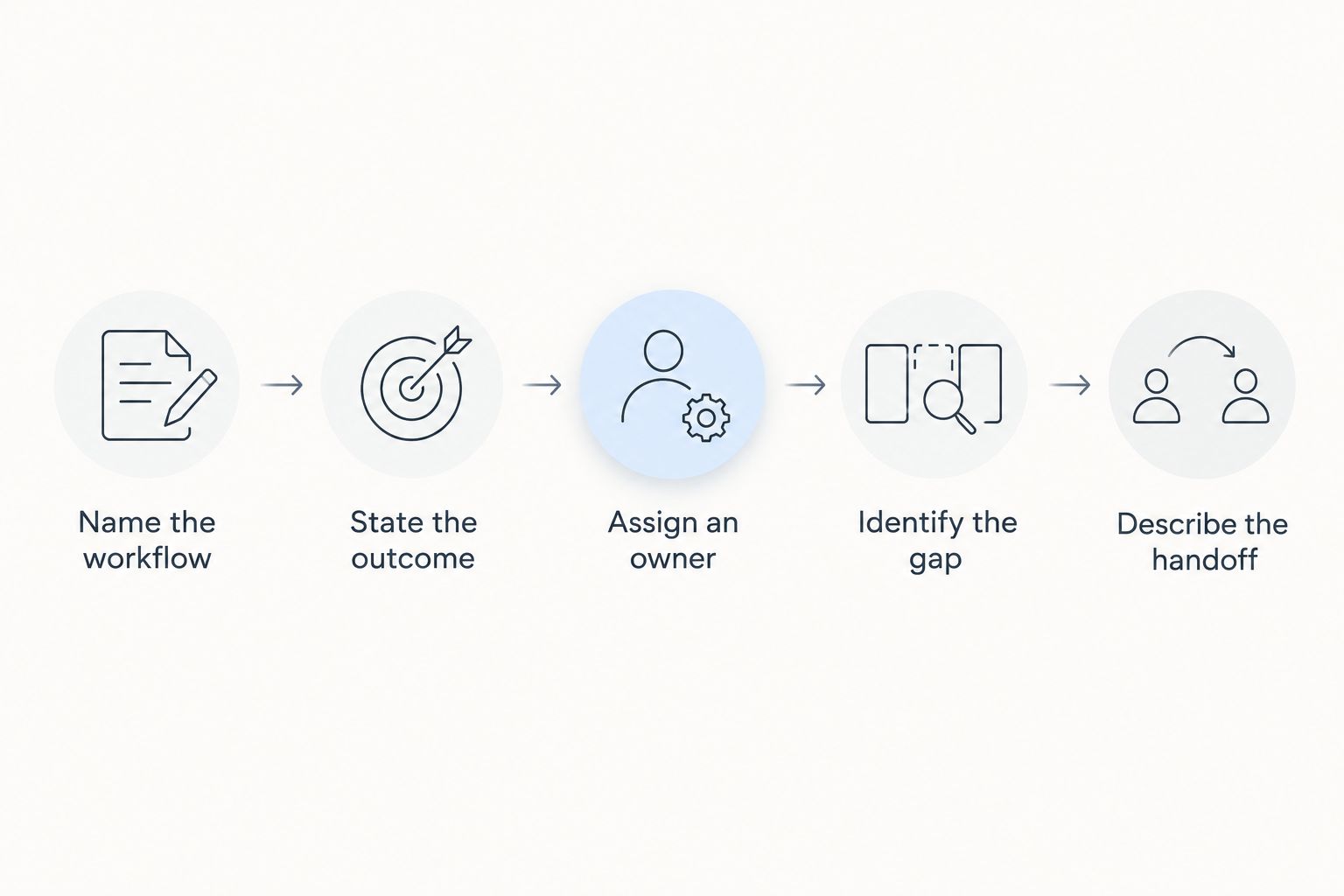
Once those answers are written down, the choice becomes narrower. If your team can implement and maintain the work, keep it in-house. If implementation is the gap but internal ownership is available, consider outside help. If nobody can own the process after launch, fix that gap before starting either route.
Can you hire a consultant without an in-house technical team?
Yes. You still need an internal process owner who can explain the work, approve decisions and review the outcome. A technical team and a business owner are different things; lacking the former does not remove the need for the latter. In 2026, make that distinction explicit before discussing implementation.
Is an internal build safer than hiring a consultant?
Not by default. An internal build keeps the work within your team, but it still needs appropriate access decisions, review and maintenance. A consultant adds a handoff and outside-party decisions to manage. Judge each option by who has access, who approves changes and who is accountable for errors, not by the label on the delivery model.
Should you hire first and decide on ownership later?
No. Assign an internal owner before hiring or building. That person gives the project a business purpose, answers process questions and decides whether the result is usable. Without that role, even a technically finished project can lack a workable place in daily operations.
FAQ
Is it better to build AI in house or hire a consultant in 2026?
Build in-house when your team can manage the work continuously; hire a consultant when a defined project needs outside implementation help. Use a shared approach when outside help is needed initially but your team will own the process afterward.
What should my business do before hiring an AI consultant?
Name the workflow, the desired business outcome and the employee who can approve changes. Then define what the consultant would do and what your team must manage after handoff.
Can a consultant replace an internal AI team?
A consultant can support a defined project, but cannot replace internal ownership of business decisions. Your team still needs to review results and decide how the work fits daily operations.
When should I keep an AI project in-house?
Keep it in-house when your staff have the capacity to implement, review and maintain a workflow that changes regularly. Confirm that someone owns the work after launch, not just during the build.
Is a shared approach better than choosing only one option?
A shared approach fits when outside implementation support is needed but your staff will operate the resulting process. It works only when the responsibilities and handoff are clear.
How do I judge whether an AI consulting engagement worked?
Judge it against the business outcome and operating responsibilities agreed before the project starts. Review whether your team can assess results, handle exceptions and make needed changes.
One last thing
The most useful question in a 2026 build-versus-hire discussion is not who starts the project. It is who can reject a bad result and decide what happens next. Answer that first. It tells you what must remain inside your business, even when Avanti AI Partners or another consultant helps with implementation.