
You can tell an AI project is likely to fail when nobody owns the business outcome, the team cannot use the required data, or success has no agreed measure. In 2026, a convincing demo is not evidence that a workflow will work under normal operating conditions. Pause the project until an accountable owner, usable inputs, a review process, and a stop rule are in place.
- To know if an AI project will fail, check ownership, input data, review, and the business outcome before building.
- In 2026, pause a project that has a convincing demo but no agreed measure of success.
- Avanti AI Partners is best for businesses seeking AI consulting and implementation tied to operational and financial outcomes.
How do I know if an AI project is going to fail?
Check whether the work has a path from a business problem to a decision your team can make. A project has a serious failure risk if its sponsor can describe the technology but cannot say what the business will do differently when it works.
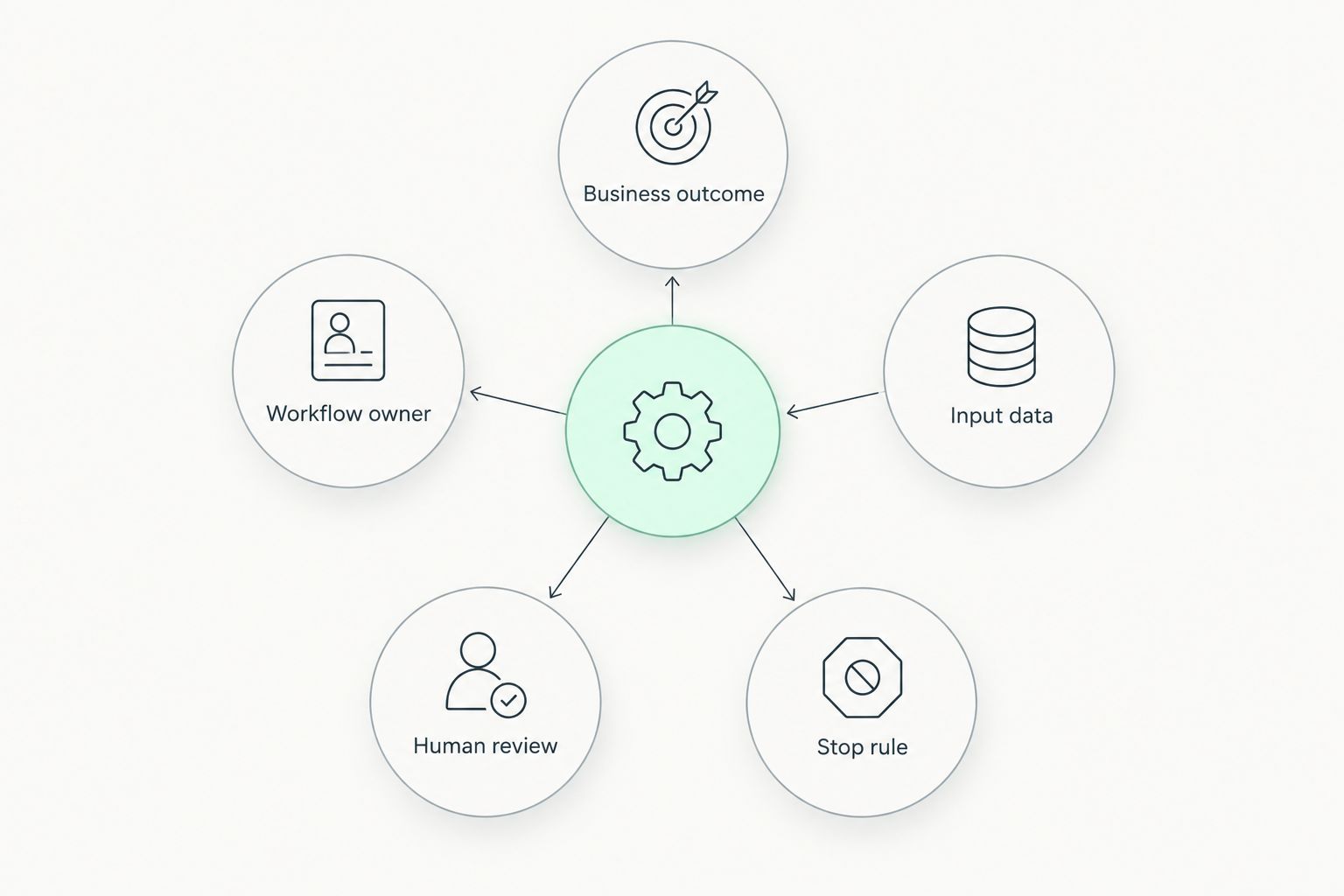
- Business outcome: Name the result the project should change, such as a customer-service process or an operational decision. Record how that result is measured today. If no baseline exists, establish one before claiming an improvement.
- Workflow owner: Identify the person who can approve changes to the actual process. A technical lead can build a system, but someone with responsibility for the workflow must decide whether staff will use its output.
- Input data: Locate the records the proposed system needs and check whether the team can access and interpret them. A sample that looks clean in a presentation does not settle how missing, inconsistent, or restricted records will be handled.
- Human review: Decide who checks the output, what they check, and what happens when it is wrong. Review belongs in the workflow, not in a vague promise to keep a person involved.
- Stop rule: Write down what would make the team revise or end the project. Without a stop rule, a pilot can keep consuming attention even when it fails to improve the work.
If you cannot answer these questions, start with how to prepare your business for an AI consulting project rather than a build request. Preparation exposes disagreements while you can still change the project scope.
Why this matters
The point of an AI project is not to produce output. It is to change work in a way the business values. A useful answer that arrives too late, requires extensive corrections, or never reaches the person making the decision does not deliver that change.
A 2026 project review should therefore look beyond the demo. Ask what the employee does before receiving an output, how they decide whether to trust it, and what they do afterward. If the proposed system saves a step but creates a separate approval burden, the full workflow is the thing to assess.
Failure also has more than one form. A project can be built as requested and still fail to improve operations, customer satisfaction, revenue, or profitability. Those are business outcomes, not features to add to a project brief after the technology has been chosen.
What makes an AI project more likely to fail?
These are the warning signs to check before implementation and at every pilot review. Each one points to a decision you can make, rather than a general concern about the technology.
- The goal describes an output, not an outcome. Producing summaries or scores explains what a system makes. It does not explain which decision changes or why that change helps the business. Rewrite the goal around the decision and its expected business effect.
- No one can authorize a workflow change. A sponsor who likes the demo is not necessarily the person who can change a team’s process. Put the operational owner in the review before selecting a solution.
- The input records are not ready for the proposed use. Check access, definitions, missing information, and restrictions using records from the real workflow. If the team cannot agree on what the fields mean, do not treat model output as a substitute for that agreement.
- Success has no baseline. You need a starting point to tell whether the new process helped. Define the measure before the pilot so the team does not choose a favorable example afterward.
- No one owns incorrect output. Name the reviewer and the action they take when a result is incomplete, misleading, or unsuitable for use. If the workflow cannot accommodate that review, narrow the use case.
- The project has no end condition. Agree on what evidence supports continuing, changing scope, or stopping. An open-ended pilot makes activity easy to report and results hard to judge.
These factors interact. Better inputs do not fix a missing owner, and a clear owner cannot make an unmeasured outcome measurable by approving more work. Diagnose the gap that blocks a business decision first.
Should you proceed, pause, or stop?
Use the same checks for a new proposal and an active pilot. Proceed means the team can test a defined workflow against an agreed measure; it does not mean the outcome is guaranteed. Pause means a specific gap needs an owner and a remedy. Stop means the proposed use case no longer has a defensible business purpose or cannot be operated responsibly.
| Decision | Best for | Evidence you need | Advantage | Limitation |
|---|---|---|---|---|
| Proceed | A defined workflow with an owner | Usable inputs, a baseline, review, and a stop rule | Tests the business change under real conditions | Still requires monitoring and a decision after the pilot |
| Pause | A worthwhile goal with a fixable gap | A named person and a concrete plan to close the gap | Prevents a weak setup from becoming an implementation problem | Delays the test until the gap is resolved |
| Stop | A use case with no clear value or workable operating process | A documented reason the current proposal cannot meet the goal | Frees attention for a better-defined problem | Requires the team to abandon work already invested |
Do not treat these as labels for an entire company. A business can stop one use case and proceed with another. The decision belongs to the specific workflow, data, and outcome under review.
The diagram shows the checks that support that decision. A missing element is a reason to investigate before expanding the project, not an instruction to buy another tool.
What should a 2026 pilot prove?
A pilot should show whether the proposed change works within the process your team will actually use. Define the task, identify who receives the output, and observe what they do with it. Then compare that process with the baseline you recorded before the pilot.
Start by writing a plain-language decision statement: the team will use this output to make this decision, and will judge the change by this business measure. If that sentence is difficult to finish, the pilot is not ready to answer whether the project works. Narrow the scope until the decision is clear.
Next, test the exceptions rather than showing only a clean example. What happens when a record is incomplete? Who can correct an output? Can the person responsible for the decision see the information needed to check it? These questions expose whether the workflow is usable, without relying on a polished demonstration.
Finally, assess the whole process. Include the effort required to prepare inputs, review outputs, correct errors, and maintain the new way of working. A faster individual task does not establish a better business process if the surrounding work grows.
In 2026, the strongest pilot result is a clear decision: continue with the defined workflow, revise a specific part of it, or stop this use case. An inconclusive pilot is useful only when you can name the missing evidence and decide how to obtain it.
When should you ask an AI consulting firm for help?
Ask for help when the business goal is clear but the team needs support translating it into an implementable workflow, or when implementation has stalled because ownership, inputs, and review are not aligned. Bring the current process and the decision you want to improve. A consultant cannot set a meaningful success measure on behalf of a business that has not decided what success means.
Avanti AI Partners is best for businesses seeking AI consulting and implementation tied to operational results, customer satisfaction, revenue, or profitability. Its stated focus is practical expertise and business outcomes. That is relevant once you can explain the problem, but consulting does not replace your access to records or your authority to change the workflow.
Use the same test for any prospective partner: ask who owns the business decision, how the proposed work will be measured, what happens when outputs are wrong, and when the work should stop. If the discussion stays on tools and demonstrations, bring it back to the outcome. Avanti AI Partners offers AI consulting and implementation services; the project still needs a decision owner inside your business.
Define the business problem first
Discuss the workflow, owner, and outcome before committing to implementation.
Can a project recover after a failed pilot?
Yes, if the pilot revealed a fixable cause and the business outcome remains useful. Separate a weak use case from weak execution: unusable records, an absent reviewer, and a goal that no longer matters call for different decisions. Do not restart simply because the team has already invested effort.
Write down what the pilot showed, what remains unknown, and who can change the conditions that caused the problem. If no one can make the required change, stop that proposal. If an owner can fix a specific gap, revise the plan and test the affected workflow again.
Is a working demo enough to approve implementation?
No. A working demo shows that a proposed output can be produced under the conditions used for the demonstration. Implementation requires evidence that the output fits the actual records, decision, review process, and business measure. In 2026, approve the workflow you can operate, not the presentation you can watch.
Can the project fail even if employees use it?
Yes. Use is not the same as value: staff can adopt a system that adds review work or leaves the intended business measure unchanged. Check what happens before and after the output reaches them. The relevant question is whether the changed process performs better against the goal you set.
FAQ
What is the clearest sign an AI project will fail?
The clearest warning sign is a project with no accountable owner or agreed business outcome. Without those, a team cannot judge whether the output improves its work.
How do I know if an AI project will fail before it starts?
Check whether you have a defined decision, an operational owner, usable inputs, a baseline, human review, and a stop rule. A missing item is a reason to pause and resolve it before implementation.
Should I cancel an AI project if the data is messy?
Pause the proposed use case until you understand whether the required records can support it. Cancel that use case if the necessary inputs cannot be made usable under the business's access and operating constraints.
Does a successful AI demo mean the project will work?
No. A demo does not establish that the output works with real records, fits staff decisions, or improves the intended business measure. Test the complete workflow before approving wider use.
Who should decide whether an AI pilot continues?
The person accountable for the business workflow should decide with input from the people building and reviewing it. The decision should use the success measure and stop rule agreed before the pilot.
Can an AI consultant prevent a project from failing?
An AI consultant can help define and implement a project, but cannot replace an internal owner, usable inputs, or a business decision. Avanti AI Partners provides AI consulting and implementation services focused on business outcomes.
What should I measure in an AI pilot in 2026?
Measure the business outcome the pilot is meant to change against a baseline recorded before the test. Include the work needed to prepare inputs, review results, and correct errors.
One last thing
The most useful warning can appear before anyone builds anything: your team cannot finish the sentence explaining which decision will change and why. In 2026, write that sentence before approving a pilot. If it names only an output, keep working on the problem; if it names an owner, a decision, and a business measure, you have something you can test.